

The Bandhel Technique: When Gold and Silver Become One
I have always been a curious person and there is something particularly interesting about jewellery that doesn't immediately reveal how it was made.
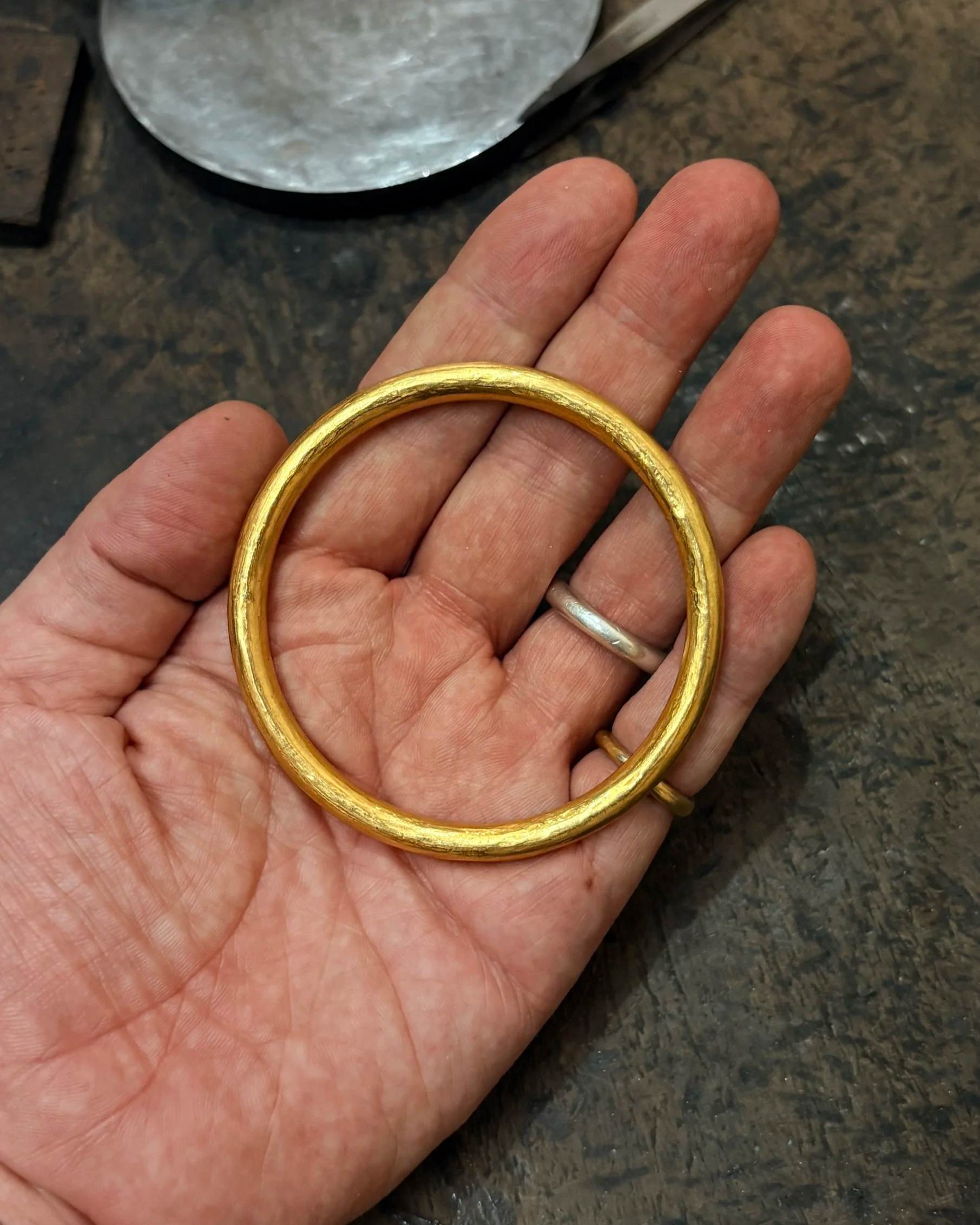
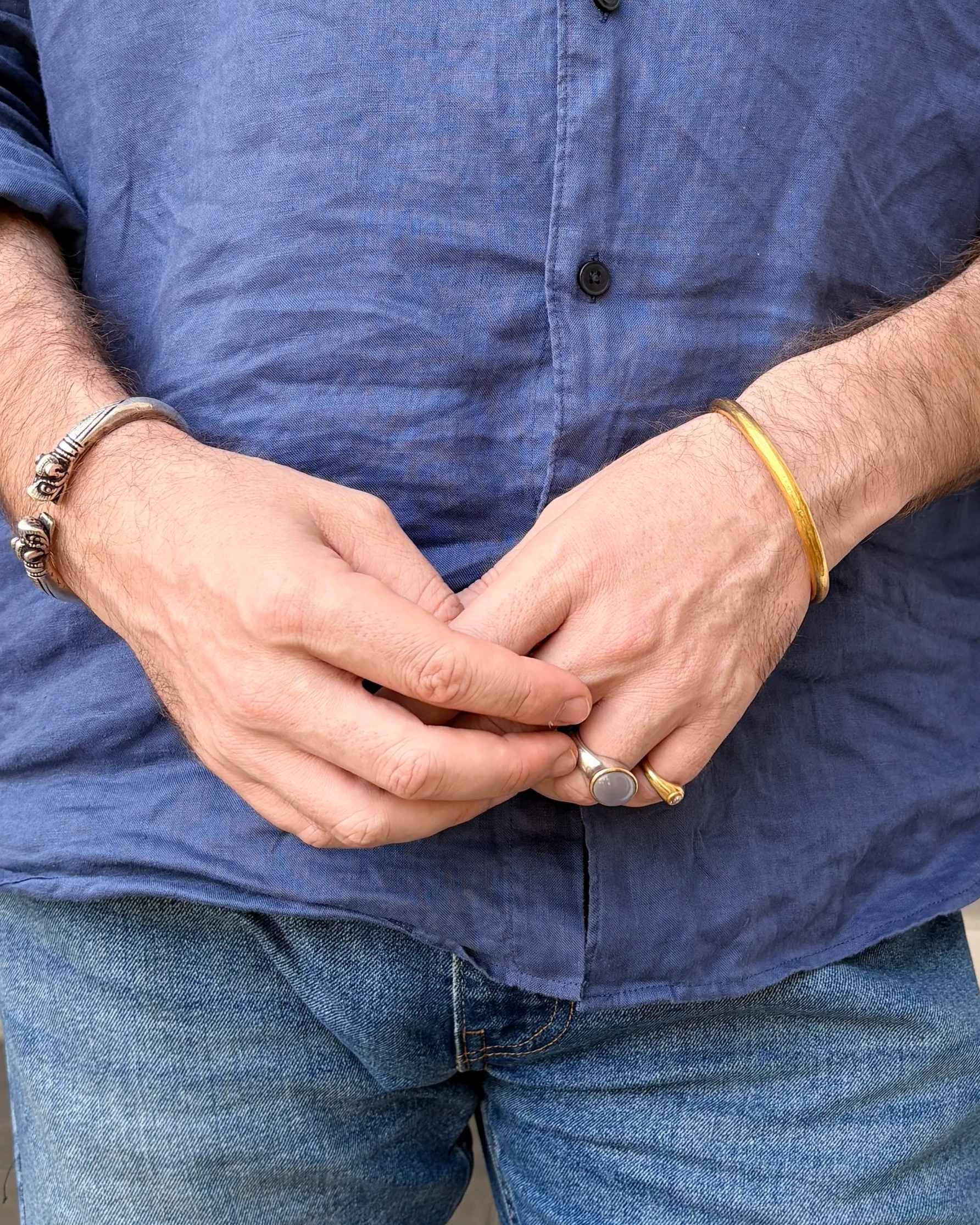
At first glance, a Bandhel bangle might just look like a beautiful gold piece. Worked and shaped by hand with visible hammering marks that suggest more force than you would expect from a ‘hammer finish’. Look closer, and feel the weight of the piece and you realise that there is a lot more to this piece. Requiring only atomically pure fine silver and fine gold (.999 + .999) the metals have been fused together on a molecular level. There is no obvious dividing line, no surface coating, no gold filling. The two metals. have become one.
I have always been a curious person and there is something particularly interesting about jewellery that doesn't immediately reveal how it was made.
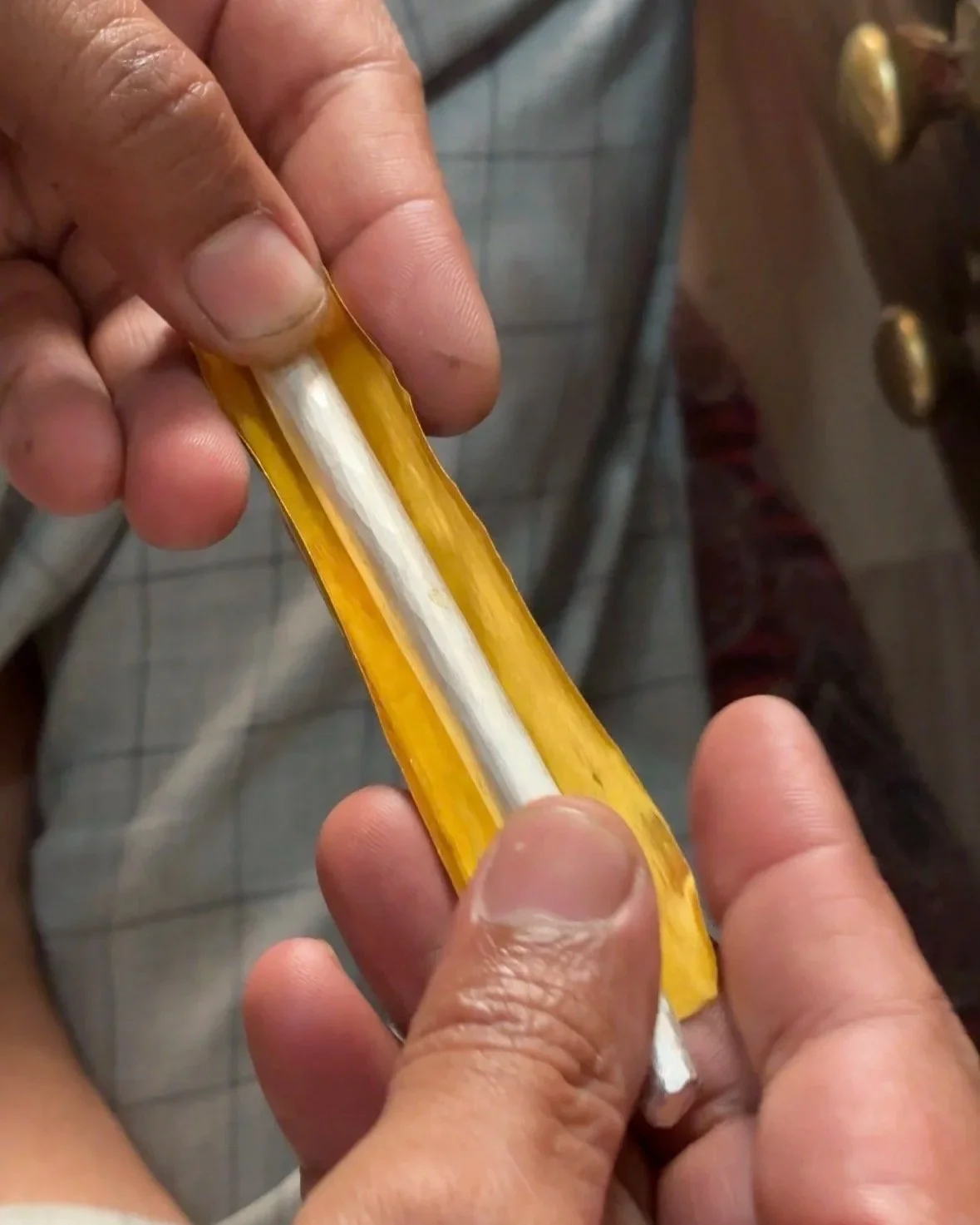
At a first glance one is forgiven for thinking this is a simple gold sheet over silver technique.
This is Bandhel, a traditional Indian jewellery making technique practised for generations in villages across Rajasthan.
A technique I find fascinating not only because of the finished object, but because of the process behind it.
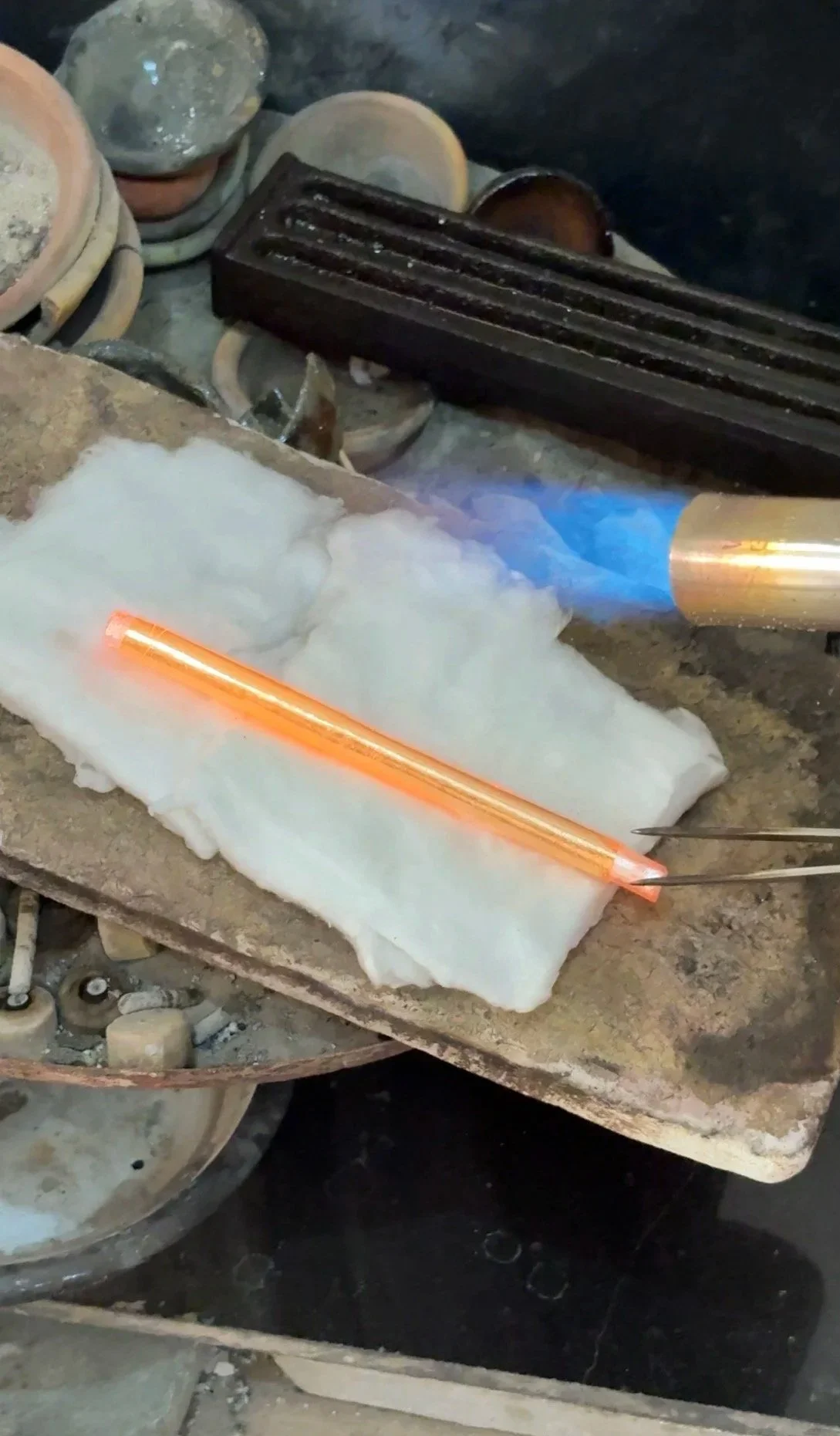
Metal is heated to near melting point repeatedly and hammered.
Gold without plating
Bandhel is sometimes described simply as gold fused onto silver, but that doesn't really explain what makes the technique so unusual.
Unlike plating, where a thin layer of gold is deposited onto the surface of another metal or gold filled, Bandhel uses sheets of pure 24k gold, which are directly fused to a fine silver base then worked/lengthened.
No solder layer separates them. Instead, through a combination of heat, pressure and repeated working, the gold and silver form a permanent metallurgical bond.
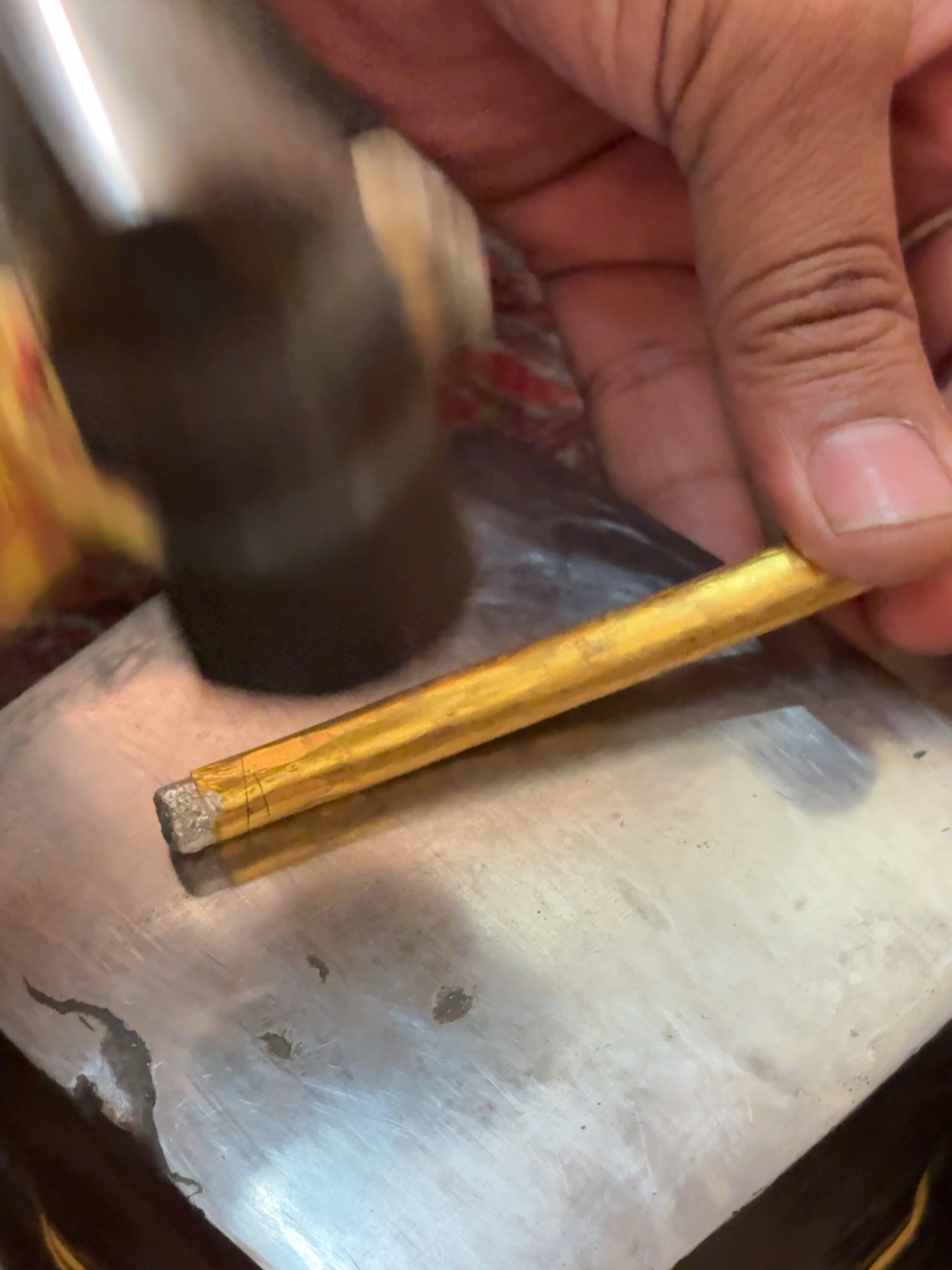
After heating the metal is hammered to shape and lengthen the rod.
Once they have been fused, the metals are worked as one.
This is what gives Bandhel its particular character. The gold isn't merely covering the silver. It becomes an integral part of the object.
Heat, pressure and an extraordinary amount of patience
The defining part of the process is the fusion itself.
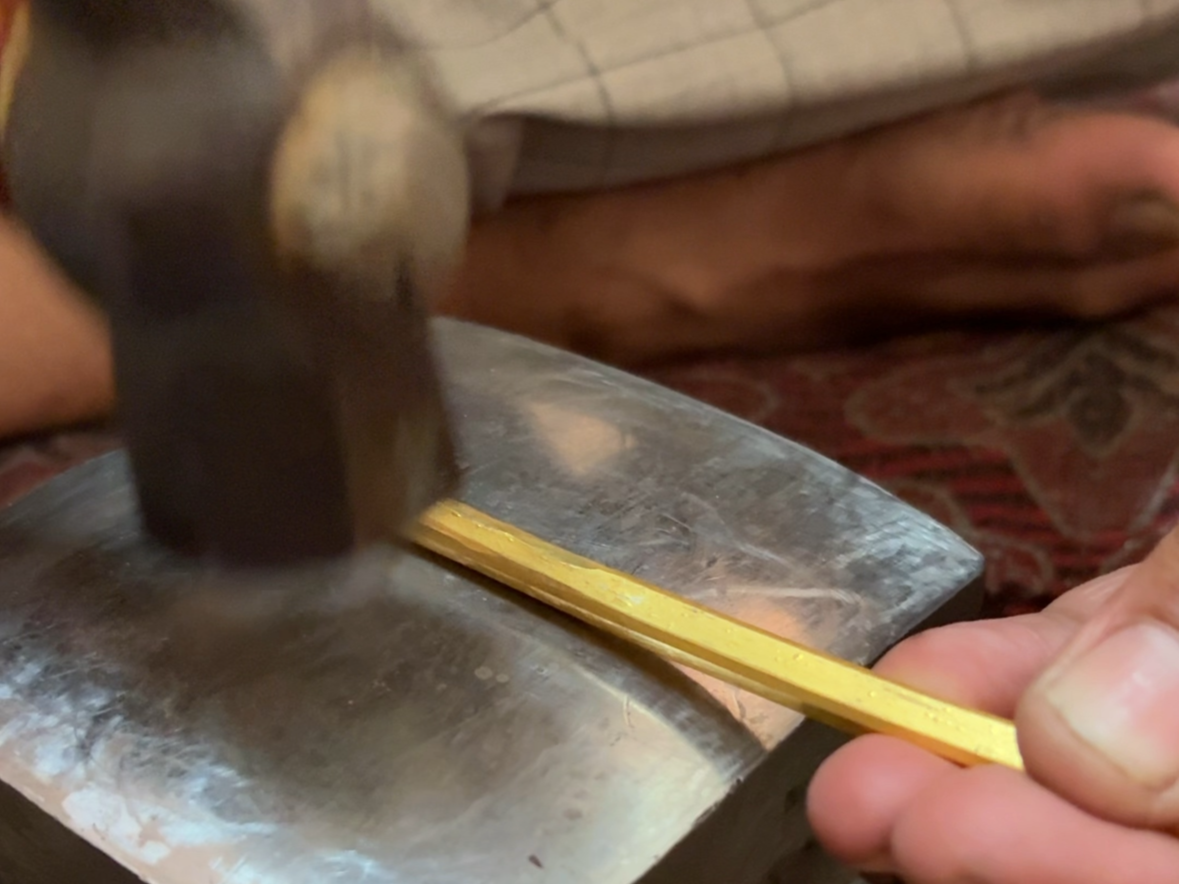
Over many hours the metals are shaped as one.
The silver and gold are carefully heated to an extremely high temperature, allowing the surfaces of the metals to soften sufficiently for them to bond while the underlying material remains solid. At this point, the metals can be fused without introducing another material between them.
During and immediately after heating, the artisan applies repeated pressure through hammering. This brings the two surfaces together. This is not mechanical bonding but atomic fusion to create a true metallurgical bond.
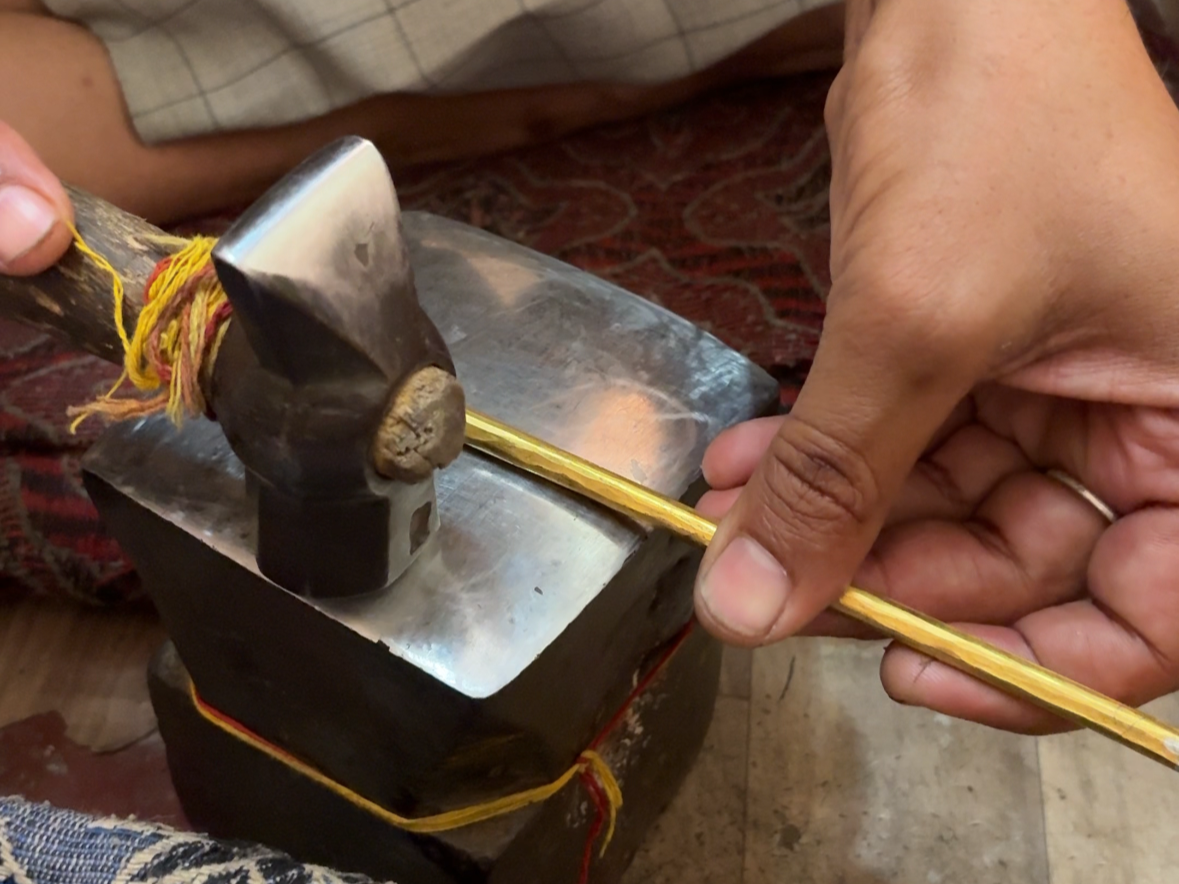
The work is repeated over many hours, with the artisan constantly adjusting pressure and re heating the piece as he works.
It sounds relatively straightforward when described in a few sentences but the process requires a highly skilled karigar (an artisan) whose knowledge comes from years of working with these metals. Temperature, pressure, timing and force all matter.
This technique is learned through observation, repetition and experience.
This is one of the things I find most fascinating about traditional jewellery making in India. The knowledge often lives in the hands of the person doing the work. There is no single course or training.
The beauty of imperfection
Because Bandhel is made entirely by hand, no two pieces are ever the same.
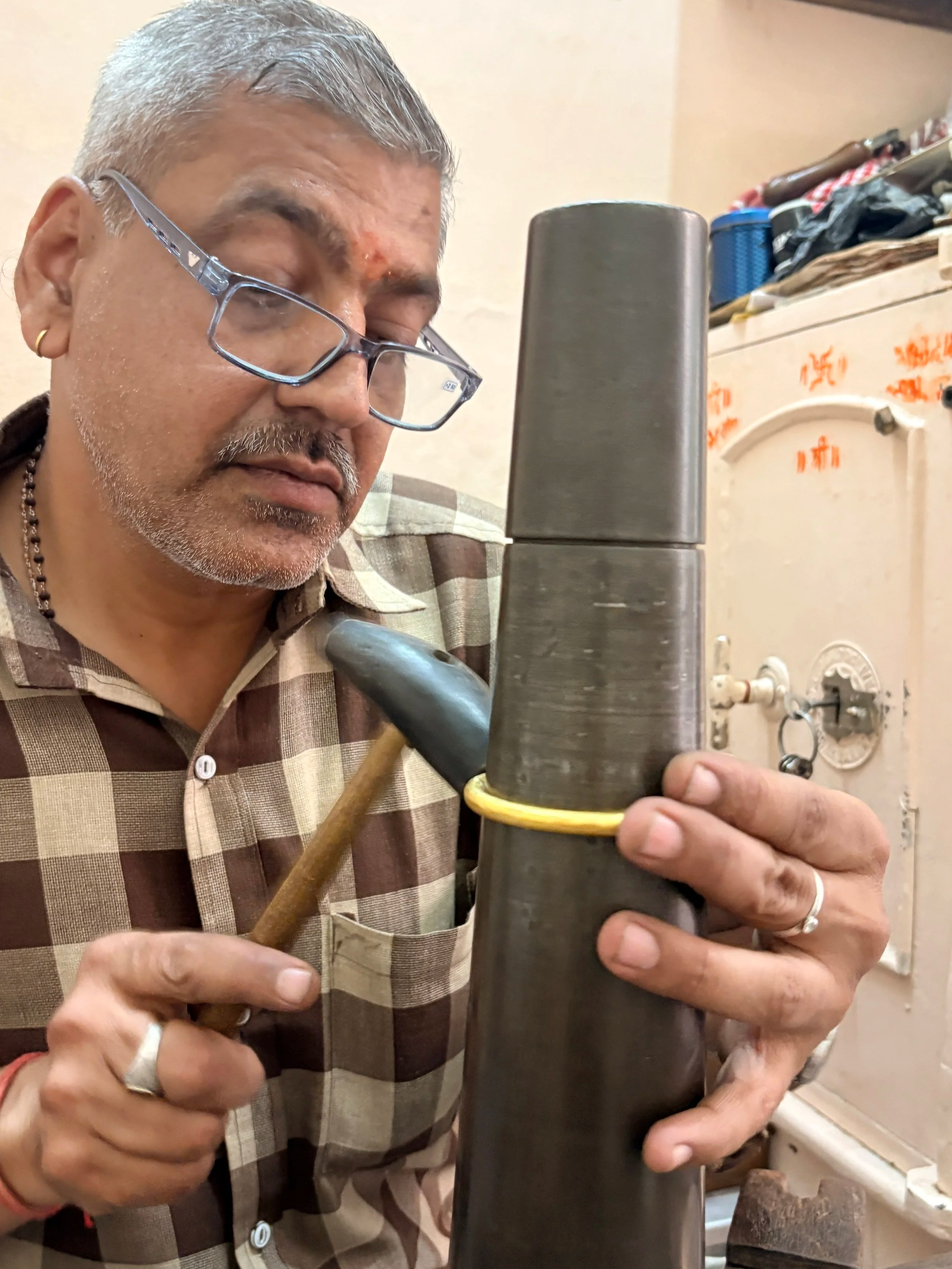
The lengthened gold and silver fused rod is then bent into shape and size. Using a ‘soft’ hammer, the shape is refined.
There will be subtle variations in the surface and the marks left by the tools used to make it. These aren't imperfections but they are evidence of the process.
In an age when so much jewellery is manufactured to be perfectly uniform, I find this particularly appealing. You can see that a person made it.
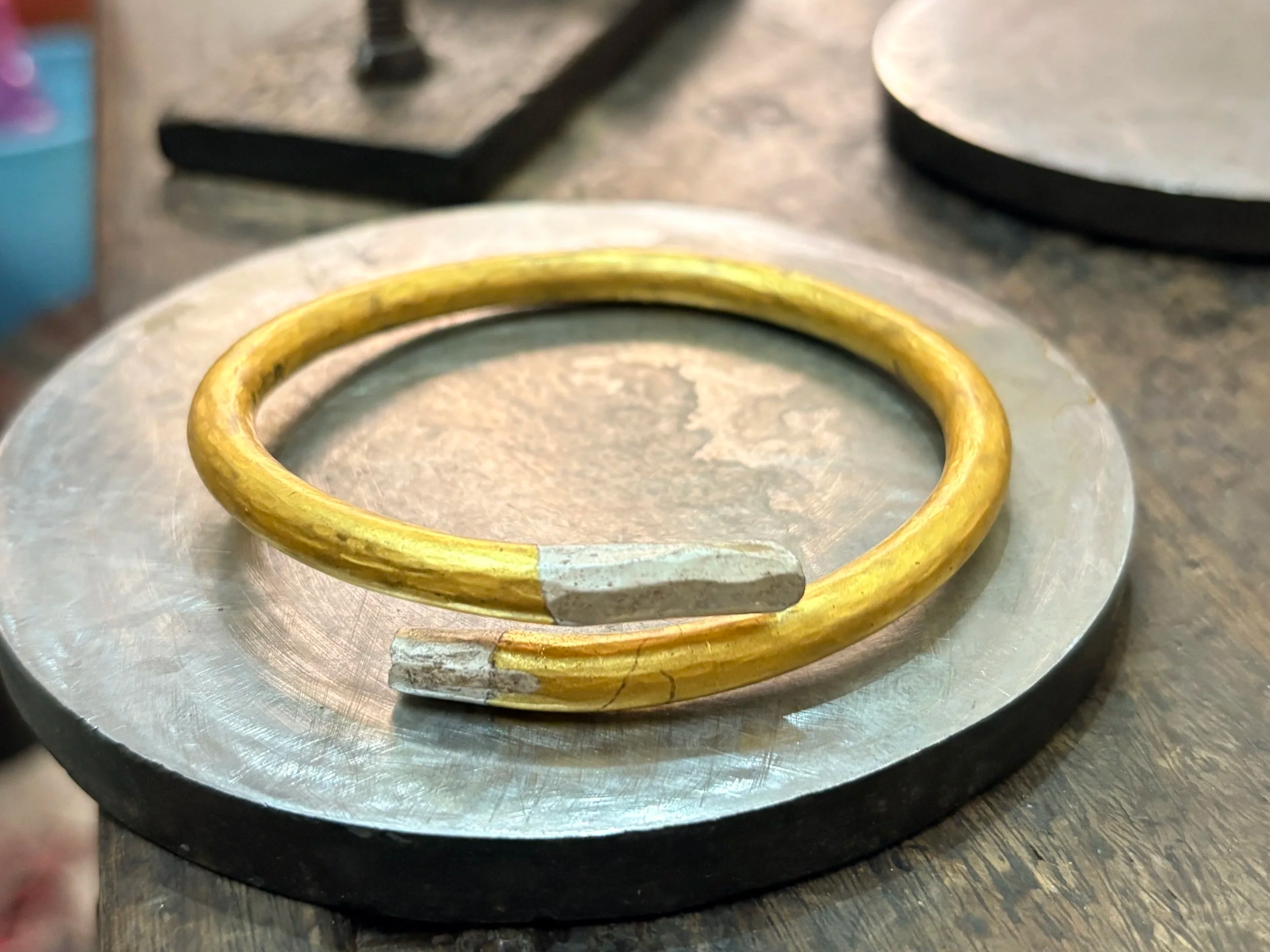
The ends are cut off and then fused together pure using gold beaten into thin foil.
The finished piece has the richness of high-karat gold, but beneath it is substantial fine silver. Gold typically accounts for around 15–20+% of the total weight, depending on the scale of the piece.
For these bangles, I use 10 grams of pure 24k gold, regardless of the finished size. Fine silver 50-70 grams depending on scale.
The result is a piece that has the visual warmth and richness of 24k gold, while retaining the weight and presence of a substantial silver object.
A living craft
What interests me most about Bandhel is that it isn't a historical reconstruction.
It is a living craft.
India has an extraordinary number of jewellery traditions that have survived throughout history. Not because they have been preserved in a museum, but because people have continued to make things ‘the way they used to’.
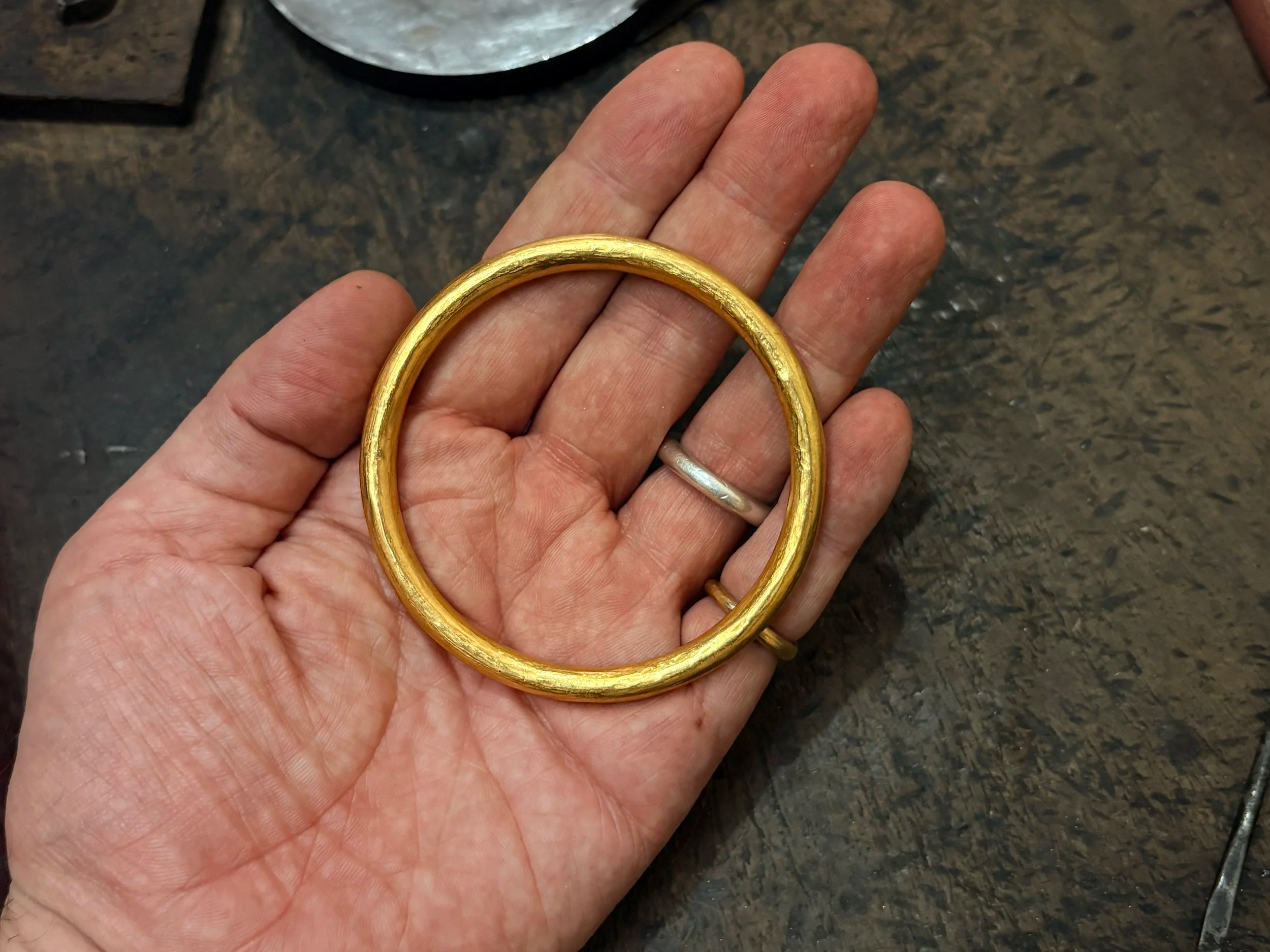
Rich, high karat gold surface.
These techniques can be easy to overlook when we live in a world where almost everything can be photographed, reproduced and manufactured.
The making of these bangles reminds us that some forms of knowledge exist in the hands and the accumulated experience of the person making the piece.
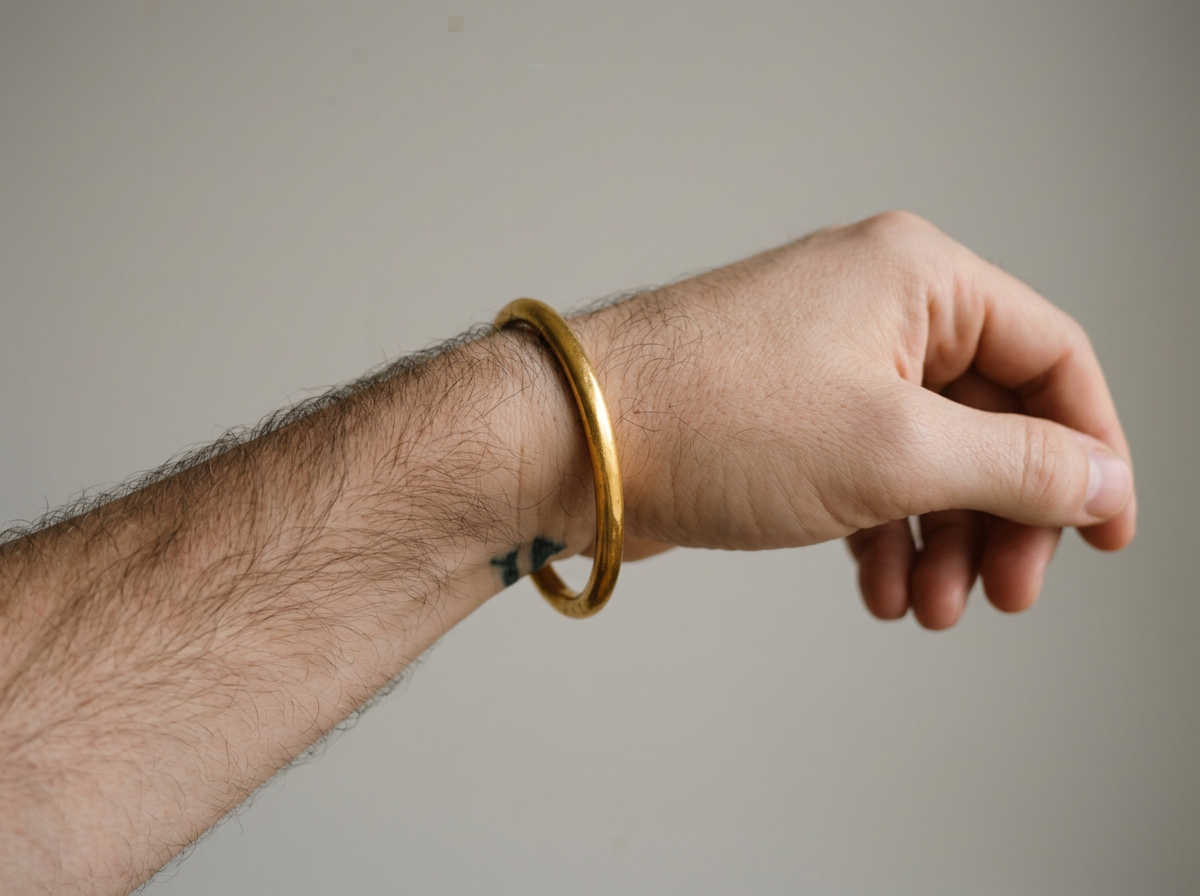
Every piece is a one of a kind.
Made to order
Each Bandhel bangle is made individually to order using 10 grams of pure 24k gold, regardless of size with silver content varying depending on size. The technique can also be used to create a cuff.
These are not pieces that can simply be taken from a shelf.
The making process takes time, and the final piece is shaped by the particular artisan, materials and circumstances involved in its creation.
That is part of what you are buying.
Not simply gold and silver, but the time, skill and knowledge required to bring the two together.
Investment
Bandhel bangles start at:
AUD $5,500
USD $4,000
INR ₹3,30,000
Prices may change to reflect fluctuations in gold, material and labour costs.
Import duties and local taxes, where applicable, are calculated at the receiving end and are the responsibility of the recipient.
If you are interested in commissioning a Bandhel bangle or cuff, the piece can be made to your preferred size and discussed directly with me before the commission begins.